When a studio production team evaluates filming locations, the decision tree is shorter than most people assume. Talent availability matters. Infrastructure capacity matters. Location aesthetics matter. But before any of those variables enter the equation, the tax credit rate determines which states are even under consideration. At 15%, Nevada is a footnote. At 30%, it becomes a competitor.
This is the rate problem sitting at the center of Nevada's film tax credit debate — and it is a problem that cannot be papered over with good intentions or favorable geography. The arithmetic is straightforward, and the comparable states have already run the experiment.
How Base Rates Become Effective Rates
Every film tax credit program starts with a base percentage, but the base rate rarely tells the full story. The comparable states Nevada is measured against have each engineered tiered structures that convert a modest starting point into a meaningfully higher effective rate for productions that meet specific criteria.
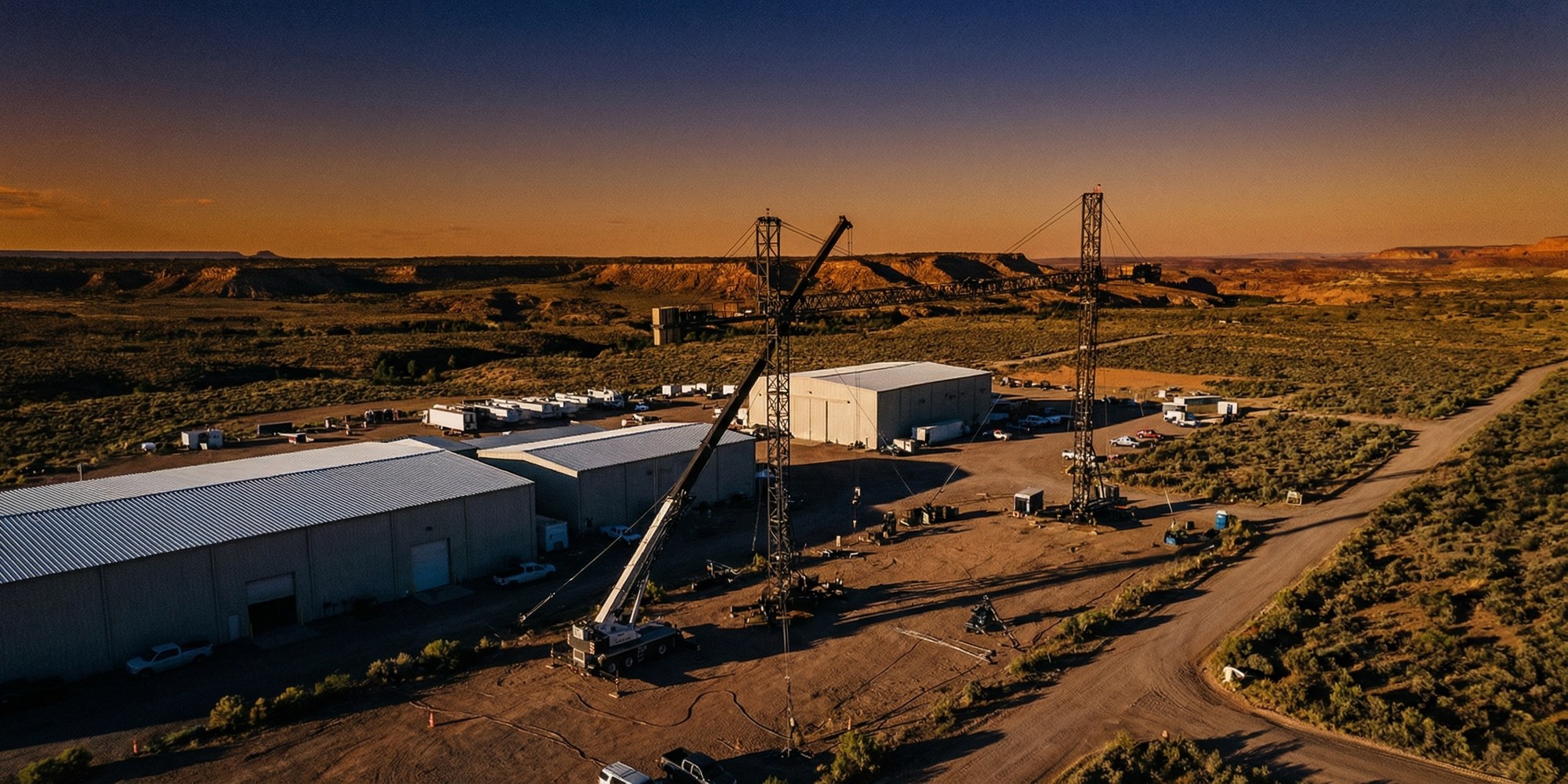
New Mexico's program offers the most instructive example. The state's base credit rate is 25% of qualified expenditures — competitive, but not exceptional on its own. The architecture layered above that baseline is what separates New Mexico from its peers. According to the New Mexico Film Office's current incentive schedule, productions filming a television series or qualifying pilot can add 5 percentage points. Productions using certified New Mexico production facilities — permanent soundstages or standing sets — earn another 5 points. Filming in rural areas at least 60 miles outside Santa Fe or Albuquerque City Halls unlocks a 10-point "filming uplift zone" bonus. Stack those, and a qualifying television series shooting at a New Mexico soundstage in a rural location reaches an effective rate of 40%.
That 40% ceiling is not a theoretical maximum rarely achieved in practice. It is a deliberate policy architecture designed to channel production activity toward infrastructure use and workforce development in specific geographic areas. The state has also been steadily increasing its annual payout ceiling: from $110 million per fiscal year through FY23, to $130 million in FY25, to $140 million in FY26, with the cap scheduled to reach $160 million by FY28. That is not a program holding steady; it is a program being actively expanded by a legislature that has seen the economic returns justify the commitment.
The Competitive Rate Landscape: Georgia, Louisiana, and New York
Georgia, the nation's dominant film production state, operates at a 30% effective rate through a different mechanism. Productions qualify for a 20% base credit on Georgia expenditures, with an additional 10% available for productions that include a Georgia Entertainment Promotion (GEP) logo in their final credits. For the studios that drive production volume — streaming platforms and major theatrical distributors — the logo requirement is trivially easy to satisfy, making the 30% rate effectively universal for qualifying productions. Georgia's program operates without a cap on total annual credits issued, meaning the state does not set a ceiling on production volume. That open-ended commitment is a significant part of why Georgia attracted over $2.6 billion in direct production spending in fiscal year 2024 alone.
Louisiana's program layers in a labor dimension that directly addresses the resident employment question Nevada legislators have repeatedly raised. The state's base credit rate is 25%, but productions using Louisiana-resident cast and crew can access an additional 10% resident labor uplift, bringing the effective rate to 35% for productions with significant local hiring. That linkage between credit value and resident employment serves a dual purpose: it maximizes the economic benefit to Louisiana workers, and it creates a built-in accountability mechanism that ties credit value directly to local job creation outcomes. The Motion Picture Association's state-by-state research consistently documents this pattern — states that embed labor uplifts into their rate structure see higher resident hiring rates than those relying on flat-rate credits alone.
New York operates at a 25% base rate for most qualifying productions, with higher-tier credits available for specific expenditures and upstate filming locations, and maintains an annual program cap of $420 million — a ceiling that reflects the scale of the state's established production market and signals long-term stability to studios planning multi-year commitments. Against this backdrop, Nevada's previous credit proposals — ranging from 15% to 25% in discussions leading into the 2025 session — represent a structural rate disadvantage before a single production decision is made.
The Dollar Math Productions Actually Run
Production incentive decisions are not made at the conceptual level; they are made with actual budget spreadsheets. A $30 million qualifying production — a television movie, a limited series pilot, a mid-budget feature — generates meaningfully different returns under each state's credit structure, and those differences drive location decisions with mathematical precision.
At 15%, Nevada's previous proposal floor, that production generates $4.5 million in credits. At Georgia's 30%, the same production generates $9 million. At New Mexico's maximum 40%, the number reaches $12 million. For a studio choosing between states, that gap is not an abstraction — it is the difference between the credit covering post-production costs or falling short of the production's contingency reserve. It determines whether the production's financial model closes.
The $4.5 million to $12 million spread on a single $30 million production illustrates why the credit rate is the gating variable in the competition for productions. Every other design feature — transferability, sunset clauses, minimum spend thresholds — operates downstream of the rate. A well-designed credit program at 15% will still lose to a less elegant program at 35%, because the dollars are the decision. For more on how Nevada's credit structure options compare across these design dimensions, see our analysis of transferable versus refundable credit mechanics.
The Tiered Bonus Structure Nevada Needs
Nevada's competitive position does not require matching New Mexico's 40% maximum on day one. It does require a credible entry point — a base rate high enough that productions include Nevada in the comparison set — and a tiered architecture that rewards the production behaviors the state most wants to incentivize.
The policy tools are established and tested across the comparable states. A base rate of 25% positions Nevada competitively against Georgia's starting point and brings it within range of Louisiana and New Mexico for base-rate comparisons. A 5-point bonus for productions hiring Nevada-resident crew above a defined threshold would follow Louisiana's resident labor model, creating a workforce development mechanism that ties credit value to local job creation. A facility bonus for productions using certified Nevada soundstage infrastructure would incentivize the private capital investment in studio construction that the state currently lacks — because without that policy signal, the studios will not be built, and without the studios, the bonus is academic.
The 2025 Nevada legislative session, tracked through the Nevada Legislature's official bill tracking system, has again raised the structural questions around film production incentives. The architecture of any emerging proposal will determine whether Nevada is actually competing in the production market or simply signaling interest without the rate structure to back it up.
What This Means for Nevada
Rate design is the part of film tax credit policy that cannot be retrofitted after launch. A credit program that launches at 15% attracts a different — and smaller — tier of productions than one that enters the market at 25% to 30%. Those initial productions build or fail to build the supply chain relationships, crew depth, and production infrastructure that determine whether Nevada becomes a self-reinforcing production hub or a state that occasionally hosts a road company while the serious volume continues flowing to Georgia, New Mexico, and New Jersey.
New Mexico's experience is the clearest operational model available. The state started with a modest credit structure and methodically engineered a tiered bonus architecture that now reaches 40% for qualifying productions. Its legislature has expanded the annual payout ceiling in $10 million increments over multiple fiscal years. The result — a film economy that has generated over $5.75 billion in total economic impact — is not separate from the rate architecture. It is a direct product of deliberate rate design, sustained legislative commitment, and an expanding cap that has given the industry confidence to build permanent infrastructure. For context on how New Mexico built that $5.75 billion economy step by step, see our comparative analysis of the New Mexico model.
Nevada has the comparable state evidence, the economic development rationale, and the 2027 legislative session as its next credible window to act. The rate it chooses will determine whether that opportunity translates into a production market — or whether the next generation of films destined for Las Vegas backdrops gets shot in Santa Fe instead.